
Table of Contents
Transforming Generative Digital Art NFTs into Physical Reality Through Sublimation Technology: A New Art Experience
The convergence of digital art and NFT technology has revolutionized how we create, own, and experience artistic works. Yet a fascinating paradox has emerged: while collectors accumulate valuable NFT art in digital wallets, many yearn for tangible manifestations they can display in physical spaces. According to NonFungible.com research, 82% of NFT collectors expressed interest in owning physical representations of their digital assets, with 67% willing to pay a premium of 15-30% for authenticated physical versions.
This demand has sparked an innovative solution—sublimation printing—a sophisticated technique that transforms blockchain-verified digital creations into museum-quality physical artworks without compromising their authenticity. The marriage of sublimation art and blockchain authentication represents a groundbreaking innovation that bridges virtual and physical realms, creating hybrid art experiences that satisfy both technological sophistication and our innate desire for tangible beauty.
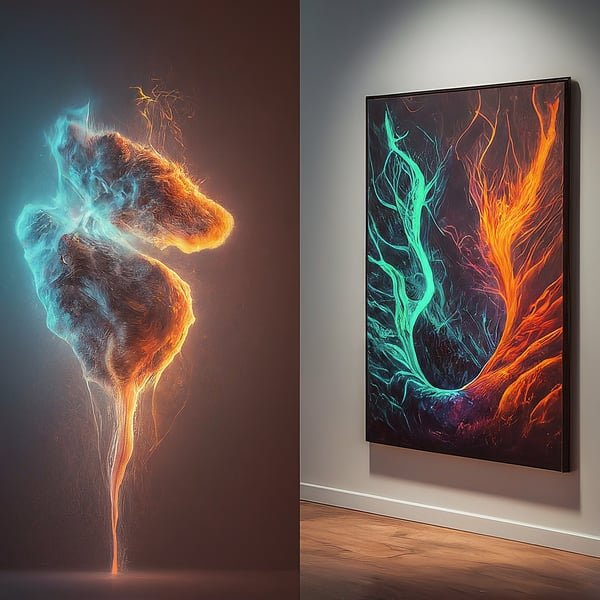
The Science Behind Sublimation Printing for Digital Art
Sublimation printing operates through a thermochemical process fundamentally different from traditional printing methods. The technique uses heat (typically 350-400°F) to convert solid dye particles directly into gas without passing through a liquid state, allowing pigments to penetrate substrate materials at the molecular level. For NFT art reproduction, this means color becomes embedded within the material structure rather than sitting on the surface, resulting in exceptional durability and color fidelity that can preserve digital artwork for decades.
The process begins with specialized sublimation inks printed onto transfer paper using modified inkjet printers. When heat and pressure are applied, these inks transform into gas and bond with polyester-coated substrates—including aluminum, ceramic, specially treated textiles, and polymer-coated papers. The molecular bonding achieved through sublimation produces color gamuts exceeding 16 million hues with exceptional accuracy, making it ideal for reproducing the complex color gradients and intricate details characteristic of generative digital art. Professional-grade sublimation systems can achieve resolutions up to 1440 dpi, ensuring that even AI-generated artworks with microscopic detail patterns maintain perfect clarity when transformed into physical manifestations.
The technical superiority of sublimation for NFT art reproduction stems from several critical advantages: complete resistance to UV degradation when using archival-grade materials, waterproof and scratch-resistant surfaces, no texture variation across the print surface, and color permanence rated for 50+ years under proper display conditions. These characteristics make sublimation the preferred method for collectors seeking museum-quality physical representations of their blockchain-verified digital assets.
[Source: Smithers Pira, “The Future of Digital Printing to 2025”, January 2024]
Blockchain Authentication Integration for Physical Artworks
Creating authenticated physical NFT versions requires sophisticated integration between blockchain verification systems and physical authentication markers. The most advanced approach employs NFC (Near Field Communication) chips or QR codes embedded directly into the physical artwork substrate, containing encrypted data that links to the original NFT’s blockchain record. When scanned with a smartphone, these authentication markers verify the artwork’s legitimacy by cross-referencing the embedded token ID, contract address, and ownership history against real-time blockchain data.
Implementation of blockchain authentication for physical NFT art follows a systematic protocol: First, generate a unique authentication certificate as a secondary NFT or blockchain record specifically for the physical manifestation. Second, embed this authentication data into a tamper-evident NFC tag or holographic QR code using encryption protocols like SHA-256.
Third, integrate the authentication marker into the physical artwork during the sublimation process—for aluminum prints, NFC chips can be sealed between the substrate and backing; for textiles, washable NFC tags are sewn into corner seams. Fourth, register the physical authentication marker in a dedicated registry smart contract that cross-references the original digital NFT. Fifth, provide collectors with verification apps or web portals that instantly confirm authenticity by scanning the embedded marker.
| Authentication Method | Durability | Cost per Unit | Verification Speed | Tamper Resistance |
|---|---|---|---|---|
| NFC Chip Embedding | 20+ years | $3-8 | Instant (<1 second) | Excellent |
| Holographic QR Codes | 10-15 years | $0.50-2 | 2-3 seconds | Good |
| Blockchain-Linked Serial Numbers | Permanent | $0.10-0.50 | 5-10 seconds | Moderate |
Leading platforms like Verisart and Artory have established industry standards for physical NFT authentication, providing APIs that artists and collectors can integrate into their sublimation workflow. These systems maintain immutable documentation of the physical artwork’s creation date, edition number, and chain of custody, ensuring that the tangible manifestation carries the same provenance transparency as its digital counterpart.
[Source: Verisart, “Physical NFT Authentication Standards and Best Practices”, March 2024]
Material Selection and Substrate Optimization
The quality and longevity of sublimated NFT art depend critically on substrate selection. Professional-grade materials for physical NFT creation fall into four primary categories, each offering distinct advantages for different artistic styles and display environments. Aluminum composite panels, typically 3mm thick with polymer coatings, provide exceptional flatness, UV resistance, and contemporary aesthetic appeal ideal for geometric or minimalist generative art. These substrates support the highest resolution sublimation transfers and offer superior preservation characteristics in both residential and gallery settings.
Textile substrates—particularly polyester fabrics with thread counts exceeding 200—enable large-format NFT art reproduction suitable for interior installations and flexible display configurations. The 2024 Art Basel and UBS Global Art Market Report documented that hybrid physical-digital art experiences showed a 156% year-over-year growth rate, with textile-based sublimation prints representing 34% of this expansion due to their versatility and dramatic visual impact. High-density polyester canvases accept sublimation dyes with exceptional color vibrancy while maintaining the tactile qualities collectors associate with traditional fine art.
Ceramic and glass substrates offer unique opportunities for three-dimensional physical NFT presentations. Sublimation-compatible ceramic tiles and tempered glass panels allow artists to create display-ready artworks that integrate seamlessly with architectural spaces. These materials provide superior stability in varying humidity environments and resist chemical degradation, making them ideal for permanent installations or collections intended for multi-generational preservation.
Advanced polymer-coated papers, specifically formulated for archival sublimation, represent the most cost-effective substrate option while maintaining professional quality standards. Premium versions use acid-free base papers with specialized polymer receptive coatings that achieve color densities comparable to aluminum substrates at approximately 40% of the cost. For collectors building extensive physical NFT portfolios, these materials enable economical reproduction of entire digital art collections without compromising authentication or visual quality.
[Source: Art Basel & UBS, “The Art Market 2024: Global Art Market Report”, April 2024]
Pre-Production: File Preparation and Color Management
Transforming digital art NFTs into sublimation-ready files requires meticulous technical preparation to ensure color accuracy and detail preservation. The process begins with extracting the highest resolution version of the NFT artwork—ideally accessing original source files rather than compressed marketplace thumbnails. For generative art stored on-chain, this may involve reconstructing the artwork using the original algorithm and seed parameters to generate an uncompressed output at the desired physical dimensions.
Color profile conversion constitutes the most critical technical challenge in the NFT-to-sublimation workflow: Digital artworks typically exist in RGB color space optimized for screen display, while sublimation printing operates most accurately in CMYK color space with specific profiles for dye-sublimation inks. Professional conversion requires specialized software like Adobe Photoshop with custom ICC profiles matched to specific sublimation printer-ink-substrate combinations. Simply converting RGB to generic CMYK results in significant color shifts—particularly in saturated blues, vibrant magentas, and deep blacks characteristic of digital generative art.
The technical workflow follows this sequence: First, obtain the NFT artwork at minimum 300 dpi resolution at intended physical size (for a 24×36 inch print, this requires 7200×10800 pixel dimensions). Second, calibrate your monitor using hardware colorimeters to ensure accurate color visualization during editing. Third, apply soft-proofing using sublimation-specific ICC profiles to preview how colors will translate to physical substrates. Fourth, make selective color adjustments to compensate for gamut limitations—sublimation excels at vibrant colors but may struggle with certain deep purples and fluorescent hues. Fifth, add appropriate bleed margins (typically 0.25-0.5 inches) to account for trimming and mounting. Sixth, embed authentication metadata and edition information directly into the file’s EXIF data for documentation purposes.
| Color Space Conversion | Accuracy Loss | Correction Method | Processing Time |
|---|---|---|---|
| RGB to Generic CMYK | 15-25% color shift | Manual adjustment | 45-60 minutes |
| RGB to Custom Sublimation Profile | 3-7% color shift | Automated with soft-proofing | 15-20 minutes |
| Direct RGB Sublimation (Advanced) | <2% color shift | RIP software optimization | 10-15 minutes |
Advanced practitioners employ RIP (Raster Image Processing) software specifically designed for sublimation workflows, such as Wasatch SoftRIP or ErgoSoft RIP, which handle color conversion with proprietary algorithms that minimize transformation artifacts while maximizing color accuracy. These professional tools cost $1,200-3,500 but prove essential for collectors and artists producing physical NFT editions at scale.
Production: Sublimation Transfer Execution
The physical sublimation process transforms prepared digital files into tangible NFT manifestations through precisely controlled heat transfer. Professional-grade sublimation requires specialized equipment: a wide-format sublimation printer (Epson SureColor F-series or equivalent) loaded with genuine sublimation inks, a heat press with digital temperature and pressure controls, and appropriate substrate materials pre-treated for dye reception.
The production workflow begins with printing the mirror-reversed artwork onto sublimation transfer paper using the prepared color-managed file. Print settings must be optimized for maximum ink density without causing bleeding—typically 1440×720 dpi resolution with high-quality print mode enabled and paper type set to “sublimation” or “thick matte” depending on transfer paper specifications. Professional sublimation for NFT art reproduction demands meticulous attention to environmental conditions: ambient temperature should be maintained at 68-75°F with relative humidity between 40-60% to prevent ink drying issues or paper curling that can compromise transfer quality.
After printing, the transfer paper must cure for 15-30 minutes before heat application to allow ink solvents to evaporate fully. Position the printed transfer face-down against the substrate, securing it with heat-resistant tape to prevent shifting during pressing. Heat press parameters vary by substrate—aluminum typically requires 400°F at 60 seconds with medium-high pressure, while polyester textiles need 380°F at 45 seconds with firm pressure. Critical success factors include: ensuring even pressure distribution across the entire artwork surface, using protective paper layers to prevent contamination, and executing a single continuous press cycle rather than multiple shorter presses.
Post-transfer care involves immediate removal of transfer paper while the substrate remains hot (using heat-resistant gloves), followed by rapid cooling to room temperature to set the dye bonds permanently. Quality inspection should examine color consistency across the entire surface, check for pressure marks or incomplete transfers, and verify that fine details and text elements transferred with full clarity. For physical NFT editions, each print should be individually numbered and logged in the authentication registry before final mounting or framing.
Post-Production: Finishing and Authentication Integration
Professional finishing transforms raw sublimated prints into gallery-ready physical NFT artworks worthy of serious collections. The finishing process varies significantly by substrate type but universally focuses on preservation, display optimization, and authentication marker integration. For aluminum prints, finishing includes edge profiling (typically rounded or beveled edges), backing panel attachment with hidden mounting systems, and application of protective UV-resistant clear coats that enhance durability without altering color appearance.
Authentication marker integration must occur during finishing to ensure tamper-evident security: For aluminum-backed prints, NFC authentication chips are positioned between the sublimated panel and backing board, sealed with industrial adhesive that would visibly damage the artwork if removal were attempted. The chip location is documented with precision measurements and photographed for the physical NFT’s digital certificate. For textile prints, authentication tags are sewn into reinforced corner pockets or integrated into the hanging sleeve, with stitching patterns that would leave obvious evidence of tampering.
Framing considerations for sublimation art differ from traditional fine art due to the medium’s unique characteristics. Sublimated aluminum prints typically mount frameless with standoff hardware that creates a floating effect, emphasizing the artwork’s contemporary digital origins. Textile prints benefit from stretcher bar mounting or professional framing with UV-protective glazing. In all cases, display hardware should support the artwork’s weight safely while allowing easy removal for authentication verification via embedded NFC or QR codes.
Final documentation includes creating a comprehensive physical NFT certificate containing: high-resolution photographs of the finished artwork, detailed specifications (dimensions, substrate, edition number), blockchain verification data linking to the original digital NFT, authentication marker location and access instructions, and care guidelines specific to the substrate material. This documentation is typically provided both as a printed certificate and as a supplementary NFT minted specifically for the physical edition, creating a complete record that enhances the artwork’s value and provenance.
Environmental Control and Display Best Practices
Proper preservation of sublimated physical NFT artworks requires understanding the material science underlying dye-sublimation bonding and implementing appropriate environmental controls. While sublimation creates exceptionally stable color bonds resistant to typical degradation mechanisms, collectors must still address environmental factors that can compromise long-term condition. The primary threats to sublimated NFT art include prolonged UV exposure, extreme temperature fluctuations, high humidity environments, and physical contaminants.
Optimal display conditions for sublimated physical NFT artworks maintain environmental parameters within specific ranges: Temperature should remain stable between 65-72°F with minimal daily variation (less than 5°F fluctuation), as thermal expansion and contraction can stress substrate materials over time. Relative humidity must be controlled between 40-55%, preventing both moisture-related degradation and excessive dryness that can cause certain substrates to become brittle. UV exposure should be minimized through strategic placement away from direct sunlight and use of UV-filtering glazing or protective coatings.
| Display Environment | Temperature Range | Humidity Range | UV Exposure | Expected Lifespan |
|---|---|---|---|---|
| Gallery-Controlled | 65-72°F | 40-55% RH | <50 lux | 50+ years |
| Residential-Standard | 60-78°F | 35-65% RH | Variable | 30-40 years |
| Uncontrolled | Variable | Variable | Direct sunlight | 10-15 years |
For collections displayed in residential settings without professional climate control, practical preservation strategies include: positioning artworks on interior walls away from windows, using LED lighting systems that emit minimal UV radiation, installing humidity monitors to track environmental conditions, and rotating displayed pieces seasonally to distribute exposure evenly across a collection. Collectors in coastal or humid climates should consider dehumidification systems for rooms housing valuable physical NFT artworks, as moisture can affect substrate stability even when sublimated dyes remain colorfast.
Advanced preservation techniques employed by serious collectors include installing museum-grade UV-filtering window films, implementing smart environmental monitoring systems that alert when conditions drift outside optimal ranges, and using archival-quality mounting and framing materials that create protective micro-environments around individual artworks. These investments prove particularly valuable for physical NFT editions with significant monetary or artistic value, ensuring that the tangible manifestation maintains condition parity with its immutable digital counterpart.
Cataloging Systems and Provenance Documentation
Comprehensive documentation systems transform disparate physical NFT holdings into professionally managed collections with enhanced value and scholarly significance. Effective cataloging integrates traditional art inventory methodologies with blockchain-specific data fields, creating hybrid records that capture both physical condition information and digital provenance. Professional collection management software adapted for NFT art includes platforms like Artwork Archive, Collectrium, and specialized blockchain-integrated systems like ArtBlocks Collection Manager.
A robust cataloging system for physical NFT collections must capture multiple data categories: Basic identification fields include artwork title, artist name, creation date, and edition information. Physical specifications document dimensions, substrate material, framing details, and current location within a collection. Blockchain data fields record the original NFT contract address, token ID, minting transaction hash, and current digital ownership status. Condition assessment includes photographic documentation taken under standardized lighting, notes on any physical imperfections or restoration needs, and periodic condition reviews conducted at regular intervals.
Authentication documentation represents the critical link between physical and digital manifestations. This includes photographs of embedded NFC chips or QR codes, verification of authentication marker functionality, records of all authentication checks performed, and documentation of the authentication certificate itself. For collections intended for eventual sale or institutional donation, maintaining meticulous authentication records significantly enhances value by providing unassailable provenance that satisfies both traditional art market standards and blockchain verification requirements.
Advanced collectors implement hierarchical organization systems that group physical NFT artworks by multiple taxonomies: chronological acquisition order, artistic style or generative algorithm type, substrate material, display location, and blockchain network (Ethereum, Tezos, etc.). This multi-dimensional organization facilitates strategic collection development, enables sophisticated analysis of collection composition, and supports efficient retrieval of specific artworks for exhibition or study purposes.
[Source: Artwork Archive, “Professional Collection Management for NFT Art: 2024 Best Practices”, January 2024]
Maintenance Protocols and Restoration Considerations
Proactive maintenance protocols extend the functional lifespan of sublimated physical NFT artworks while preserving their aesthetic and monetary value. Unlike traditional fine art media that may require specialized conservation treatments, sublimation prints respond well to straightforward care routines when executed properly. The fundamental principle of maintenance for sublimation art involves minimizing physical contact, preventing contaminant accumulation, and addressing any damage immediately before it progresses.
Routine care protocols for sublimated physical NFT artworks follow substrate-specific guidelines: Aluminum prints require only occasional dusting with microfiber cloths and can be cleaned with slightly dampened soft cloths when necessary, as the sublimated surface is waterproof and highly resistant to cleaning solutions. Textile-based prints need more delicate handling—vacuuming with soft brush attachments removes dust without abrading fibers, while spot cleaning should use pH-neutral detergents specifically formulated for polyester. Ceramic and glass substrates tolerate standard glass cleaning products but should be dried immediately to prevent water spotting.
Restoration of damaged physical NFT artworks presents unique challenges due to the molecular bonding of sublimation dyes. Minor surface scratches on aluminum substrates can sometimes be buffed with ultra-fine polishing compounds, though this risks altering the surface finish. More significant damage—such as dents, tears in textile substrates, or color fading from excessive UV exposure—typically requires professional restoration or, in severe cases, reprinting from the original digital file. This reprinting capability represents a significant advantage of physical NFT artworks: unlike traditional fine art where damage may be irreversible, digital art sources enable perfect reproduction when properly archived.
Collectors should establish maintenance schedules that include: monthly visual inspections for any signs of degradation, quarterly detailed condition assessments with photographic documentation, annual professional cleaning for high-value pieces, and immediate attention to any damage or environmental incidents (water exposure, impact damage, etc.). For collections with significant insurance value, maintaining detailed maintenance logs provides essential documentation for claims and demonstrates proper care standards that may affect coverage terms.
Conclusion
The transformation of generative digital art NFTs into physical reality through sublimation printing represents a profound innovation that addresses the fundamental human desire for tangible artistic experiences while maintaining the technological sophistication and provenance transparency of NFT technology. Professional execution of this transformation requires mastering technical workflows spanning color management, sublimation process optimization, blockchain authentication integration, and long-term preservation protocols. The convergence of these disciplines creates physical NFT artworks that satisfy both collectors’ need for displayable art and the blockchain community’s demand for verifiable authenticity.
As the NFT art market continues maturing, the value proposition of expertly crafted physical NFT editions becomes increasingly apparent. These hybrid artworks bridge the digital-physical divide, enabling art experiences that engage multiple senses while retaining the immutable provenance and authentication capabilities that distinguish blockchain-based art from traditional media. For collectors, artists, and institutions, developing expertise in sublimation art techniques and collection management protocols positions them at the forefront of this emerging art form that redefines how we create, own, and experience contemporary art.
The future of physical NFT creation will likely see continued innovation in authentication technologies, expanded substrate options, and increasingly sophisticated integration between blockchain records and physical manifestations. Collectors who invest in proper preservation, documentation, and care protocols today are building collections that will maintain their value and condition for generations, demonstrating that the marriage of digital art and physical craftsmanship creates artworks with enduring significance in both technological and artistic history.
How do you envision the evolution of physical NFT art in your own collection strategy? What aspects of the digital-to-physical transformation process do you find most compelling or challenging? Share your experiences and perspectives in the comments below!
References
- NonFungible.com – NFT Market Analysis and Collector Behavior Studies
- Art Basel & UBS Global Art Market Report – Comprehensive art market data and digital art trends
- Smithers Pira Digital Printing Forecast – Sublimation printing market analysis and projections
- Verisart Physical NFT Authentication – Authentication standards and blockchain integration protocols
- Society for Imaging Science and Technology – Color management and digital reproduction technical papers
- American Institute for Conservation – Environmental preservation guidelines for contemporary art
- Getty Conservation Institute – Conservation perspectives on hybrid digital-physical artworks
🔗 Related Resource: The Complete Guide to NFT Art Authentication and Blockchain Verification Methods
➡️ Stay Updated with the Latest Articles in Space Safety Magazine