
Table of Contents
The Moon: The Next Frontier in the Global Resource Scramble
Looking up at the night sky in 2026, the Moon feels closer than ever before. It is no longer merely a poetic symbol or a destination for symbolic footprints; it has transformed into the world’s most valuable industrial park. As we stand firmly in the mid-2020s, the narrative has shifted from “exploration” to “exploitation” in the most strategic sense. The race is no longer just about planting flags—it is about securing the fundamental building blocks of the future space economy.
We are witnessing the dawn of a new era where Moon water and Rare earth elements are the currency. For collectors of information and investors in the future, understanding this shift is crucial. It represents a convergence of geology, economics, and geopolitics that will define the next century. This isn’t science fiction anymore; it is the harsh, exciting reality of our current industrial evolution.
The Convergence of Water and Rare Earth Elements
When we discuss lunar resources, we are primarily analyzing two distinct categories that serve different, yet equally critical, purposes. On one hand, we have water ice, primarily located in the permanently shadowed craters of the lunar poles. This is the “oil” of the space age. On the other hand, we have rare earth elements (REEs)—scandium, yttrium, and lanthanides—that are essential for high-tech electronics, renewable energy hardware, and defense systems on Earth.
The convergence of these resources creates a unique strategic value proposition. Water provides the means to travel and sustain life (fuel and oxygen), while rare earths provide the material incentive to build infrastructure. In my view, this duality is what makes the Moon so irresistible right now. It is a self-servicing gas station sitting atop a gold mine. The synergy between these resources means that mining operations can potentially fuel themselves, drastically reducing overhead costs over time.
Defining the New Resource War
We often read about “Resource Wars” in history books regarding oil or spices. However, the lunar resource war is fundamentally different because it is occurring in a legal and logistical vacuum. As of 2026, nations and private corporations are rushing to establish “safety zones” and mining claims, testing the limits of the 1967 Outer Space Treaty.
This isn’t necessarily a war of weapons, but a war of presence and technology. Who can deploy their extraction rovers to the Shackleton Crater first? Who can refine regolith efficiently in low gravity? The entity that controls the most accessible water deposits effectively controls the logistics of the inner solar system. It is a high-stakes game of “King of the Hill” played in zero gravity, where the winner dictates the price of transit to Mars and beyond.
Lunar Water: The Lifeblood and Fuel of Future Space Endeavors
Confirmed Deposits at the Poles
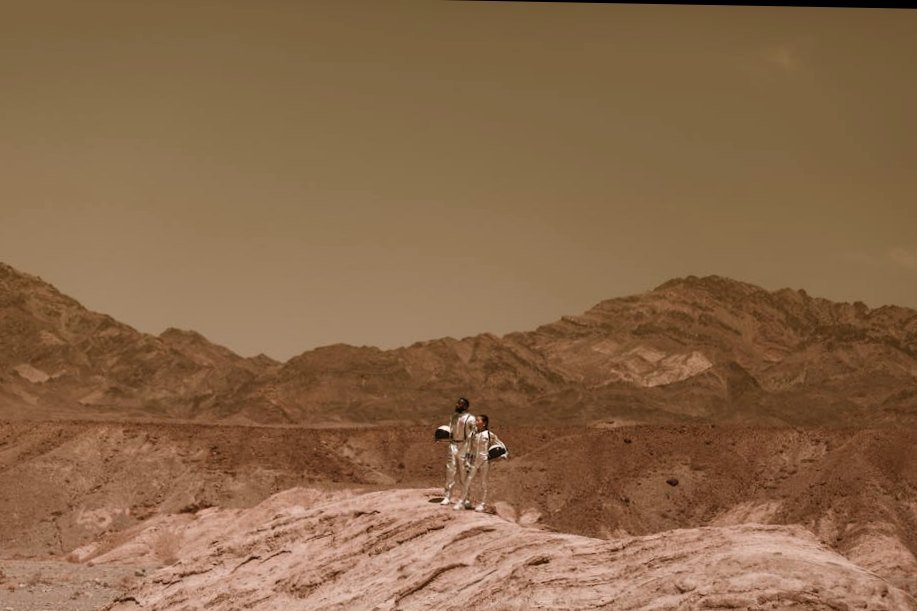
The confirmation of water ice on the Moon was the single most pivotal discovery for the space economy. We now know that billions of tons of water ice are trapped in the “cold traps” of the north and south poles. These areas, which haven’t seen sunlight for billions of years, act as cosmic freezers.
From a collector’s or investor’s perspective, think of these craters as prime real estate. The density of ice in the regolith varies, but even low concentrations are incredibly valuable when the alternative is launching water from Earth at thousands of dollars per kilogram. The South Pole-Aitken basin has become the focal point of almost every major space agency’s roadmap. It is crowded, it is treacherous, but it holds the key to sustainability.
ISRU: Turning Ice into Rocket Fuel
You might wonder: why is water so important if we aren’t planning to swim in it? The answer lies in chemistry. Water (H₂O) can be split into Hydrogen and Oxygen through electrolysis. Liquid Hydrogen is a potent rocket fuel, and Liquid Oxygen is the oxidizer needed to burn it.
In-Situ Resource Utilization (ISRU) is the technical term for “living off the land.”
- Extraction: Rovers heat the icy regolith to sublimate the ice into vapor.
- Capture: The vapor is captured and condensed back into liquid water.
- Processing: Electrolysis splits the water using solar or nuclear power.
- Liquefaction: The gases are cooled to cryogenic temperatures for storage.
This process turns the Moon into a refueling depot. A spacecraft can launch from Earth with just enough fuel to reach orbit, dock at a lunar station, refuel with moon-made propellant, and head to Mars at a fraction of the cost.
Sustaining Life Beyond Earth
Beyond fuel, water is obviously critical for human survival. But its utility goes deeper than just drinking. Water is used for radiation shielding (it is excellent at blocking cosmic rays), growing plants in hydroponic systems, and maintaining thermal control in habitats.
Imagine a lunar base in 2030. It won’t be a sterile tin can; it will likely be a humid, green environment powered by recycled lunar water. The ability to close the loop—recycling urine and sweat back into potable water, supplemented by harvested lunar ice—is what will allow humanity to transition from “visiting” the Moon to “living” on it. Without local water, we are merely tourists with a limited supply of bottled water.
Rare Earth Elements on the Moon: Powering Earth’s High-Tech Future

Why We Need Moon Minerals
Rare Earth Elements (REEs) are the “vitamins” of modern industry. They are used in tiny quantities but are absolutely essential. Your smartphone, the magnets in wind turbines, the motors in electric vehicles, and the guidance systems in missiles all rely on them.
The problem is that on Earth, mining these materials is dirty and geopolitically fraught. The Moon offers an alternative. While the concentrations might not always match the richest veins on Earth, the accessibility on the lunar surface (no need to dig miles deep) and the lack of a biosphere to pollute make it an attractive long-term option. We are looking specifically for elements like Neodymium, Lanthanum, and Yttrium.
The KREEP Terrane Advantage
Geologists have identified specific regions on the Moon, particularly the Procellarum KREEP Terrane, which are rich in Potassium (K), Rare Earth Elements (REE), and Phosphorus (P). This isn’t random distribution; it is a geological jackpot.
Comparison of Mining Environments:
[Data Summary]
- Feature : Environmental Impact / Terrestrial Mining (Earth) : High (Toxic runoff, habitat destruction) / Lunar Mining (Moon) : Low (No biosphere to damage)
- Feature : Energy Cost / Terrestrial Mining (Earth) : High (Crushing hard rock, deep transport) / Lunar Mining (Moon) : High (Launch costs, but lower gravity helps)
- Feature : Regulation / Terrestrial Mining (Earth) : Strict national environmental laws / Lunar Mining (Moon) : Developing international space law
- Feature : Primary Challenge / Terrestrial Mining (Earth) : Geopolitical monopolies / Lunar Mining (Moon) : Harsh environment, radiation, vacuum
The KREEP terrane suggests that the Moon differentiated chemically early in its history, concentrating these valuable elements in the crust. For a resource strategist, this means we know exactly where to look.
Breaking the Terrestrial Supply Chain
Currently, the supply chain for REEs is heavily centralized, creating vulnerabilities for global tech industries. A disruption in one part of the world can halt the production of EVs or fighter jets globally.
Mining the Moon offers a strategic “second source.” While it won’t replace Earth mining tomorrow, by the 2040s, high-value refined materials from the Moon could be dropped down gravity wells to Earth or, more likely, used to build heavy industry in space (satellites, stations) without ever needing to lift materials out of Earth’s deep gravity well. This decoupling of space infrastructure from Earth’s resources is the ultimate goal.
The Emerging Lunar Resource War: Geopolitics and Economics in Orbit
Major Players and Their Targets
The landscape of lunar exploration has exploded. It is no longer a duopoly of superpowers. We have a vibrant mix of national agencies and aggressive private companies.
Key Stakeholders in the Lunar Resource Race (2026 Status):
[Data Summary]
- Entity : USA (NASA + Partners) / Primary Program : Artemis Program / Focus Resource : Water Ice (South Pole) / Strategic Goal : Establish Base Camp, Gateway Station
- Entity : China (CNSA) / Primary Program : ILRS (Research Station) / Focus Resource : Water & Helium-3 / Strategic Goal : Long-term habitation, energy dominance
- Entity : Private Sector (SpaceX, etc.) / Primary Program : Starship / Lander Systems / Focus Resource : Propellant (ISRU) / Strategic Goal : Mars transit infrastructure, commercial mining
- Entity : India (ISRO) / Primary Program : Chandrayaan Series / Focus Resource : Water Prospecting / Strategic Goal : Cost-effective resource mapping
The competition is fierce. China and the US are essentially targeting the same strategic craters at the South Pole because that is where the physics dictates the water is. This overlap creates inevitable friction and the need for diplomatic de-confliction zones.
The Legal Gray Zone: Who Owns the Moon?
Here is where the situation becomes complex. The Outer Space Treaty of 1967 dictates that no nation can claim sovereignty over the Moon. However, the US-led Artemis Accords introduce the concept of “Safety Zones” around operations to prevent interference.
Critics argue this is a de facto land grab. If you establish a mine and declare a 5km safety zone around it, you effectively own that territory for as long as you occupy it. In 2026, we are seeing legal frameworks struggle to keep pace with the speed of drilling technology. The question isn’t “Can we mine?” but rather “Who keeps the profits?” and “Who resolves disputes when two rovers want the same patch of ice?”
Technological Horizons: Innovations for Lunar Mining and Processing
Robotics and Autonomous Systems
Humans are fragile, and spacesuits are clumsy. The heavy lifting of the lunar resource war will be done by robots. We are seeing a boom in “swarming” technology—small, autonomous rovers that work together like ants.
These robots need to be incredibly resilient. Lunar dust (regolith) is as sharp as glass and electrostatically charged; it destroys joints and clogs gears. The innovation here lies in tribology (the study of friction) and autonomy. These machines must make decisions independently because the light-speed delay makes remote control from Earth too slow for delicate mining operations.
Powering the Operations: Nuclear on the Moon
Solar power is effective, but the lunar night lasts for 14 Earth days. In the shadowed craters where the water resides, there is no sunlight at all. To run industrial crushers and heaters, we need reliable, high-density power.
This is why Small Modular Reactors (SMRs) and radioisotope systems are being developed rapidly. Nuclear power is the only realistic way to sustain industrial-scale mining in the permanent darkness of the polar craters. It provides the heat needed to sublime ice and the electricity to run the electrolysis plants.
Shaping the Future: The Impact of Lunar Resources on Earth and Space
The Trillion-Dollar Space Economy
Analysts predict that the space economy could reach the trillion-dollar mark shortly. Lunar resources are the catalyst. Once we stop bringing every kilogram of material from Earth, the cost of doing business in space will plummet.
This opens the door for:
- Space Tourism: Hotels orbiting the Moon.
- Manufacturing: Creating perfect fiber optics or bio-printing organs in zero gravity.
- Energy: Solar power satellites built from lunar materials beaming clean energy back to Earth.
The “Cislunar Economy” (the economy between Earth and the Moon) is poised to become a distinct economic zone, much like a new continent.
Environmental Relief for Earth
Ultimately, the vision shared by many futurists is to move heavy, polluting industries off Earth. Why destroy the Amazon to mine rare earths when we can mine a dead rock like the Moon?
By utilizing lunar resources, we can preserve Earth as a residential and biological sanctuary while outsourcing the dirty work of heavy industry to the cosmos. It is a long-term vision, but the steps we are taking in 2026 with lunar water and minerals are the first concrete moves toward that reality. It fundamentally changes the moral calculus of consumption.
Conclusion: A New Era of Resource Exploration
The Moon is no longer just a celestial neighbor; it is the anchor of our future economy. The pursuit of lunar water and rare earth elements is driving a technological renaissance and a geopolitical reshuffling that rivals the maritime expansion of the 16th century.
For us, the observers and collectors of this history, it is a fascinating time to be alive. We are watching the map of humanity expand in real-time. The challenges are immense—radiation, dust, distance, and law—but the reward is nothing less than the stars themselves.
Are you ready to embrace the era where our resources come not just from the ground beneath our feet, but from the sky above?
🧩 Resources, reactors and rivalries will decide the new moon race
➡️ Stay Updated with the Latest Articles in Space Safety Magazine