
Table of Contents
Introduction to Lunar Mining
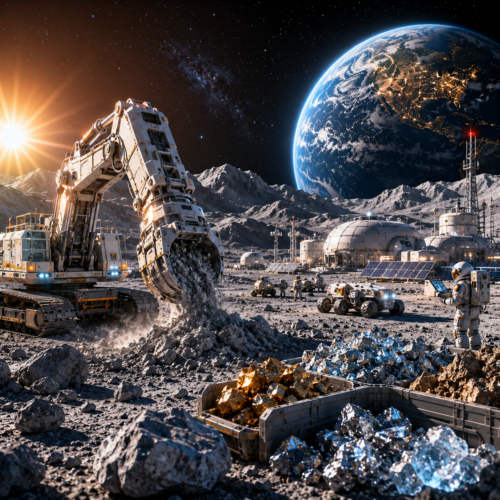
Lunar mining refers to the extraction of resources from the Moon’s surface with the intention of supporting both terrestrial and extraterrestrial economies. As humanity progresses in its quest to establish a sustainable presence beyond Earth, lunar mining is becoming increasingly relevant. This interest is driven by the potential for vast resources, such as water ice, rare earth elements, and Helium-3, which could serve several purposes including life support, fuel, and technological advancement.
The primary techniques for lunar mining focus on various methods of extraction and processing. These can include excavation, robotic systems, and potentially, in-situ resource utilization (ISRU) methods. Excavation might involve both traditional and novel drilling technologies adapted for the Moon’s unique environment. Robotics play a crucial role in reducing risks and costs, allowing for more precise and efficient tasks under harsh conditions. Moreover, ISRU techniques aim to take advantage of local materials, reducing the need for resupply missions from Earth, thereby making lunar bases more sustainable.
The importance of lunar mining extends beyond immediate economic benefits. The resources tapped from the Moon could prove essential in supporting human missions to Mars and beyond, acting as a refueling stop or a supply source. As global interest in space exploration ignites, several nations and private companies are investing heavily in lunar mining technologies. Collaborative efforts and international treaties are emerging to ensure that activities on the Moon are conducted responsibly, keeping in mind the preservation of celestial environments while enabling the exploration and use of extraterrestrial resources.
The Potential Benefits of Lunar Resources
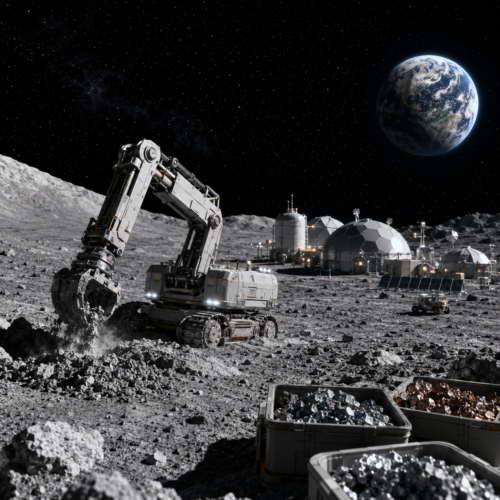
The Moon possesses a plethora of resources that can potentially reshape both our terrestrial economy and the future of space exploration. Notable among these are water ice, rare minerals, and helium-3. Water ice, which is believed to be abundant in permanently shadowed craters, serves as a crucial resource for sustaining human life on lunar bases. It can be converted into oxygen for breathing and hydrogen for fuel, facilitating long-term human habitation on the Moon.
Furthermore, lunar resources offer a unique opportunity for mining rare minerals. The Moon’s surface is rich in various materials, including platinum-group metals, which are vital for numerous industrial applications on Earth. The extraction of these rare minerals could significantly reduce the reliance on terrestrial mining, thereby minimizing environmental impacts associated with land disruption and pollution. This shift could lead to a more sustainable materials economy, catering to both current and future demands.
Another promising resource is helium-3, an isotope that holds great potential as a fuel for future nuclear fusion reactors. Helium-3 is relatively scarce on Earth but is thought to be present in substantial quantities on the lunar surface. Utilizing this resource could revolutionize the energy landscape, providing a cleaner and more sustainable energy source. If harnessed effectively, helium-3 could help meet the world’s increasing energy demands without the detrimental byproducts associated with conventional fossil fuels.
In summary, the potential benefits of lunar resources extend beyond mere economic interests. They could pave the way for advancements in technology, sustainable practices, and human survival in outer space. Harnessing these resources offers a path towards establishing a robust space economy that benefits not only our planet but also future generations of explorers and innovators.
Technological Trends in Lunar Mineral Extraction
The exploration and extraction of minerals from the Moon have gained significant momentum, driven by advancements in technology. Several key trends have emerged, particularly in robotics, automation, and remote sensing, which are collectively shaping the future of lunar mining and its integration into the space economy.
Robotic technologies play a pivotal role in lunar mining operations. These robots, designed to withstand harsh lunar conditions, are equipped with sophisticated tools to assist in the extraction process. Innovations such as autonomous rovers and drones are being developed to carry out tasks such as surveying, sampling, and transporting mined materials across the lunar surface without the need for human intervention. This not only enhances efficiency but also significantly reduces operational risks associated with human presence on the Moon.
Automation further complements these robotic systems. Automated processes are essential in managing the extraction workflows on the Moon, from mineral identification to the extraction itself. Advanced algorithms and artificial intelligence (AI) allow for real-time decision-making, enabling equipment to adapt to varying geological conditions. For instance, AI can be utilized to analyze data from lunar surface scans, ensuring that valuable resources are identified and harvested effectively.
Remote sensing technologies also play a critical role in lunar mining. Utilizing satellite imagery and advanced spectrometry, these technologies provide insights into the composition of the lunar surface. By mapping out potential mining sites with high mineral concentrations, companies can optimize their extraction strategies and reduce operational costs. This data is instrumental in ensuring that lunar mining operations are both sustainable and economically viable.
In conclusion, the convergence of robotics, automation, and remote sensing technologies is not only transforming the landscape of lunar mineral extraction but is also setting the stage for a burgeoning space economy. As these innovations continue to evolve, they will undoubtedly play a significant role in unlocking the Moon’s resources, paving the way for future exploration and utilization of extraterrestrial materials.
The European Space Agency’s Status on Resource Exploration
The European Space Agency (ESA) has positioned itself at the forefront of space exploration, particularly concerning the potential for resource extraction on the Moon and beyond. With an increasing interest in lunar mining, ESA has initiated various ambitious programs aimed at understanding the feasibility and methodologies pertinent to celestial resource exploration.
One of ESA’s notable initiatives is the Moonlight program, which seeks to establish a European lunar navigation and positioning system. This program is essential for future lunar mining activities as it will enhance operational accuracy on the lunar surface, facilitating efficient resource extraction. The program emphasizes technological advancements while fostering international collaborations necessary for comprehensive exploration efforts.
ESA has also partnered with different space agencies and commercial entities globally to share knowledge and resources. For example, collaborations with NASA and private space companies like Airbus have allowed ESA to participate in missions that collect data on lunar minerals and regolith. This collective effort not only enhances technical capabilities but also promotes innovation in mining technologies.
The agency’s Hera mission represents another critical step toward understanding resource utilization in deep space. Scheduled for launch in the near future, Hera aims to assess the potential resources available on celestial bodies while promoting sustainable practices for their extraction. Such programs are indicative of ESA’s commitment to ensuring that lunar mining is conducted responsibly, balancing economic benefits with environmental stewardship.
Moreover, ESA has acknowledged the importance of public and private engagement in space resource exploration. By promoting educational initiatives and public awareness campaigns, the agency encourages a broader understanding of the implications of lunar mining and the sustainability of space environments.
The Geopolitical Landscape of Space Resource Acquisition
The pursuit of lunar mining has become a focal point in the global discussion surrounding space resource acquisition, as nations strategize to secure extraterrestrial assets. The involvement of various countries illustrates the increasingly competitive nature of space exploration, particularly in the context of the projected immense wealth held in lunar resources, such as helium-3, rare earth elements, and water. Geopolitical dynamics are rapidly evolving, and countries like the United States, Russia, and China have begun to lay foundational frameworks to establish their presence on the Moon.
The United States has positioned itself as a proponent of responsible lunar exploration through initiatives like the Artemis program, aimed at renewing its leadership in space and ensuring that lunar resources are accessible to all under international law. This stance highlights a commitment not only to techno-scientific advancements but also to robust partnerships with allied nations, fostering cooperative efforts on mining technology and regulations. Conversely, China’s aggressive space program focuses on establishing a lunar base and robust mining operations, raising concerns about potential monopolization of critical resources and the assertion of territorial claims.
Additionally, the Outer Space Treaty of 1967, which provides a framework for international cooperation and prevents any nation from claiming sovereignty over extraterrestrial bodies, faces scrutiny. As more nations express interest in lunar mining, interpretations of this treaty will be tested, potentially leading to conflicts over resource ownership rights. Countries like India and private space enterprises are also venturing into this arena, amplifying the competition while emphasizing the need for collaborative governance in space resource utilization.
The future of lunar mining will not only be shaped by technological advancements but also by the geopolitical maneuvers of nations striving to assert their position in the burgeoning space economy. How these powers navigate international regulations and potential disputes will significantly impact the peaceful use of outer space for generations to come.
Economic Implications of a Space Economy
The space economy is an emerging sector with significant implications for global commerce and trade. As humanity advances toward lunar mining and other resource extraction ventures in space, the economic landscape is poised for transformation. The extraction of resources from the Moon, such as water ice and various minerals, presents opportunities for developing new markets. The availability of these resources can help sustain long-term missions and facilitate the growth of a lunar economy that feeds into terrestrial markets.
Lunar mining could catalyze substantial investment opportunities. Private companies and governmental agencies are already allocating resources toward research and technology development for efficient extraction processes. As technological advancements continue, it will lower costs and enhance feasibility, attracting even more investments. This influx of capital is likely to stimulate industries ranging from robotics and materials science to aerospace engineering, marking a new era in public-private partnerships.
Moreover, the potential for job creation is vast. The emergence of businesses focused on lunar mining operations demands a skilled workforce, leading to an increase in employment opportunities across various sectors. Engineers, scientists, and operators, among others, will find new career paths as the industry evolves. Additionally, ancillary services and support industries, such as logistics and communication systems, will benefit from the growing space economy, boosting job growth further.
The ripple effects of these economic developments extend beyond immediate investments and job creation. As lunar resources become more accessible, they could reshape global supply chains, potentially leading to shifts in power dynamics among nations. Countries that invest in space resource extraction may gain strategic advantages, driving further innovation and competition in the space sector.
Sustainability Concerns of Lunar Resource Extraction
The prospect of mining resources on the Moon heralds a considerable shift in how humanity interacts with celestial bodies. However, this shift also brings forth significant environmental and ethical implications that necessitate rigorous evaluation. As plans for lunar mining advance, it is critical to confront concerns surrounding sustainability, particularly the impact that such operations may have on the lunar environment, which remains largely untouched.
One of the foremost issues is the potential degradation of the Moon’s surface. Unlike Earth, the Moon lacks an atmosphere, meaning that any disturbances caused by mining operations could lead to long-lasting consequences. Dust generated from mining activities may affect not only the lunar landscape but could also potentially interfere with future scientific missions and observatories. Careful consideration must be given to mining techniques that minimize disruption to the Moon’s regolith and geological integrity.
Furthermore, ethical considerations surrounding the rights to exploit celestial resources emerge as an essential aspect of this conversation. The Outer Space Treaty of 1967, which governs international space law, stipulates that celestial bodies are the province of all humanity, thereby complicating private enterprises’ claims to ownership and exploitation rights. Any approach to lunar mining must incorporate sustainability practices that reflect an ethical commitment to preserving lunar environments for current and future generations.
The development of responsible mining regulations must therefore be prioritized. Striking a balance between resource extraction and environmental protection is imperative in forming policies that guide lunar mining endeavors. By promoting sustainable practices and fostering a collaborative regulatory framework among nations and private enterprises, we can ensure that lunar resources are utilized responsibly, mitigating the ecological impact while maximizing benefits for Earth and the broader space economy.
Future Scenarios for Human Space Habitation
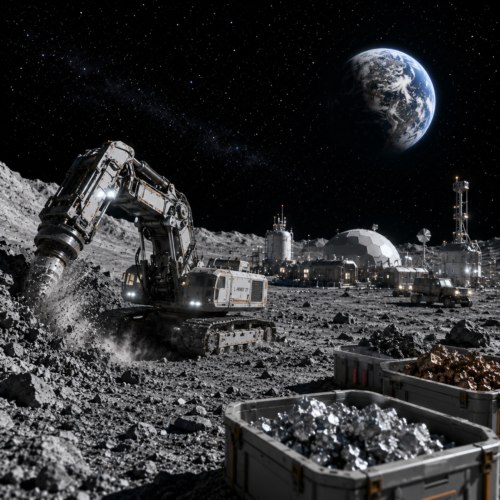
The advent of successful lunar mining operations holds profound implications for human habitation on the Moon and Mars. Initial scenarios envision the Moon as a significant staging ground, where mining activities would yield vital resources such as water ice, helium-3, and various minerals. These resources could facilitate the establishment of sustainable habitats, supporting human life through the production of water, fuel, and building materials, therefore reducing reliance on Earth-dependent supply chains.
With the establishment of such infrastructures, the Moon could evolve into a bustling hub of scientific research and commercial activities. It could function as a launchpad for deeper space exploration, particularly missions to Mars. The mined resources could further enable advancements in propulsion technologies, thereby shortening travel times between celestial bodies and improving the feasibility of long-term human presence on Mars.
As mining technologies advance, the integration of robotics and artificial intelligence may enhance efficiency and safety in resource extraction. Future habitats on the Moon could feature autonomous systems capable of operating in harsh lunar environments, thereby minimizing human exposure to its challenges. Moreover, the successful implementation of mining operations can catalyze the development of an interconnected space economy, where lunar resources are traded and utilized in sustaining habitats on Mars.
Additionally, the psychological and societal aspects of human habitation in space are worth considering. The establishment of permanent bases on the Moon and Mars would create a new frontier for humanity, fostering a sense of community and shared purpose among inhabitants. This collaborative environment would be essential for overcoming the challenges posed by isolation and the harsh conditions of these celestial bodies.
In conclusion, lunar mining operations are not merely about resource extraction; they represent the foundation for future human habitations on the Moon and Mars. The advancements in mining could lead to significant developments in our interplanetary presence, ultimately reconfiguring how humanity interacts with the cosmos.
Conclusion and Future Outlook
As we advance into the realm of lunar mining and the broader space economy, it is essential to reflect on the myriad of impacts and considerations surrounding resource extraction on celestial bodies. The blog post has outlined the transformative potential of mining operations on the Moon, emphasizing their capacity to reshape not only our understanding of space exploration but also the economic structures inherent to it. Through innovative technologies, we can access previously unreachable resources, such as Helium-3, platinum group metals, and water ice, augmenting our energy supplies and fostering sustainable off-Earth colonies.
Moreover, the role of strategic planning in the realm of lunar mining cannot be overstated. Collaborative efforts among international space agencies and private companies will be pivotal in establishing regulations and guidelines that prioritize environmental conservation while promoting efficient resource utilization. This endeavor necessitates that stakeholders engage in ongoing dialogue, ensuring that ethical practices govern activities beyond our planet. The framework built today will guide future generations in their pursuit of sustainable lunar resources.
Future research into advanced extraction techniques, environmental impact assessments, and potential legal frameworks will be crucial in realizing a responsible approach to lunar mining. As new technological advancements unfold, iterative improvements in mining methodologies and sustainability practices will facilitate a harmonious relationship with these extraterrestrial environments. Understanding the socio-economic implications of our actions and prioritizing equitable access to space resources will further solidify the foundations of a thriving space economy.
In summary, the advent of lunar mining heralds a new era ripe with possibilities for humanity’s future in space. Through strategic international collaboration and informed research efforts, we can harness these celestial resources responsibly and sustainably, ensuring that the benefits of the space economy are shared with all of humanity.
The October Prime Day sale is ending soon
🧩 Tour information site – wiztour.com