
Table of Contents
Introduction: Understanding Rare Earth Elements in the Context of Space Missions
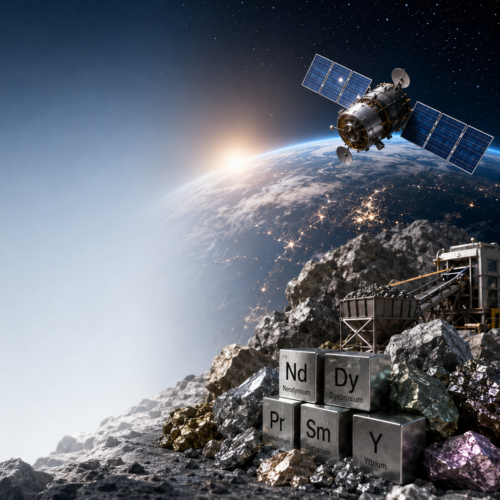
Rare earth elements (REEs) encompass a group of 17 chemical elements found in the periodic table, notably including lanthanides, together with scandium and yttrium. These elements are critically important in the engineering and manufacturing of modern technologies, particularly in fields where precision and durability are paramount, such as the aerospace and space industries. In the context of space missions, REEs are instrumental in producing advanced materials and components essential for the functionality of satellites, space probes, and other aerospace technologies.
The incorporation of rare earth elements in the space sector is primarily due to their unique properties, which contribute to the development of high-performance magnets, phosphors, catalysts, and batteries. These applications are foundational in the production of equipment that supports crucial space exploration goals, including those aimed at extra-terrestrial research, satellite communications, and global positioning systems. As space missions become increasingly complex and ambitious, the reliance on REEs continues to grow, making the stability of their supply chain an issue of utmost importance.
However, the procurement and availability of REEs pose significant challenges. Most of these materials are concentrated in specific regions around the world, making them susceptible to geopolitical tensions, environmental regulations, and supply chain disruptions. The demand for rare earth elements in high-tech industries further complicates this scenario, potentially leading to competitive pressures that can jeopardize their availability for space applications. Understanding the critical role that rare earth elements play in the engineering of space technologies serves to underscore the pressing need to address the risks associated with supply chain instability in order to ensure the sustainability of future space missions.
Current State of the Rare Earth Supply Chain
The global rare earth supply chain plays a critical role in various high-tech industries, notably in the sectors of renewable energy, electronics, and defense. It is characterized by several key players and countries that dominate production and distribution. China remains the world leader, responsible for approximately 60% of the total global output, followed by countries like the United States, Australia, and Russia. Each of these regions contributes to a complex network that supports technology and innovation across multiple domains.
One of the significant challenges in the rare earth supply chain is the concentration of supply. A small number of mining operations provide a major portion of the needed materials, which raises concerns about sustainability and long-term availability. The highly concentrated nature of production means that any disruption in these key regions could have a cascading effect on global markets and industries that rely heavily on rare earth elements. This potential for disruption also warrants attention to the environmental concerns arising from mining activities. Rare earth mining processes can lead to soil degradation, water pollution, and loss of biodiversity, representing a significant hurdle to achieving environmental sustainability.
Additionally, geopolitical tensions further complicate the dynamics of the rare earth supply chain. Many countries are increasingly recognizing the strategic importance of these materials, leading to uncertain trade policies and potential export restrictions. Such measures can create market volatility, making it essential for industries and governments to develop diversified sourcing strategies. These strategies aim to minimize reliance on any single country and to ensure a more resilient supply chain for rare earth elements that are vital for sustaining long-term space missions and technological advancements.
Geopolitical Impacts on the Rare Earth Supply Chain
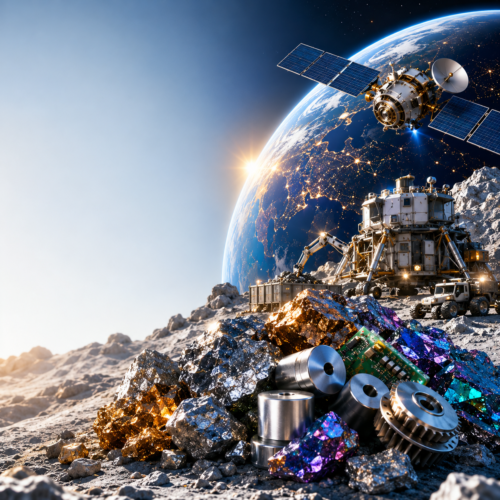
The geopolitical landscape surrounding rare earth elements significantly influences the stability of their supply chain. Rare earth elements, essential for various high-tech applications including space missions, are predominantly found in a few countries. Notably, China is the leading producer of these critical substances, holding an overwhelming portion of the global market. Such concentration raises concerns over potential supply disruptions due to geopolitical tensions.
International relations play a pivotal role in shaping the dynamics of rare earth supply chains. For instance, trade policies implemented by major producers can lead to increased export quotas or, conversely, restrictions that limit access to these vital materials. Tensions between nations, particularly those producing and consuming rare earth elements, can escalate into tariffs or export bans, further complicating the situation. The escalating trade war between the United States and China serves as a case study of how such geopolitical issues can lead to uncertainty in access to rare earth materials.
Moreover, conflicts in regions that are rich in rare earth deposits can threaten the stability of the supply chain. For example, political instability in countries like Myanmar or potential conflict zones in Africa may disrupt production and distribution networks. Therefore, companies involved in space missions must remain vigilant about the geopolitical developments that could affect their supply lines for rare earth elements.
As space exploration continues to expand, the importance of a secure and stable supply chain for rare earth elements grows. Organizations must develop strategies to mitigate risks associated with geopolitical instability, ensuring that access to critical materials remains intact. This proactive approach is crucial to the sustainability of future space missions, as reliance on unstable supply sources poses significant operational challenges.
Economic Value of Lunar Resource Mining
The prospect of mining resources on the Moon presents significant economic potential, which could fundamentally transform the sustainability of future space missions. Among the primary resources identified for extraction are Helium-3, rare earth elements, and water ice, each holding substantial promise for both terrestrial and extraterrestrial applications.
Helium-3, a rare isotope, could serve as an efficient fuel for nuclear fusion, promising nearly limitless energy for power generation on Earth and supporting long-term human presence in space. Estimates suggest that the Moon could hold over one million tons of Helium-3, potentially worth trillions of dollars, depending on how quickly fusion technology advances and its subsequent commercialization.
Moreover, the Moon is rich in various rare earth elements, such as neodymium and dysprosium, which are critical for high-tech applications, including electronics, renewable energy technologies, and defense systems. The global demand for these elements is projected to increase as societies become more reliant on advanced technologies. Lunar extraction of these resources could relieve pressure on Earth’s supply chains, making it a feasible solution for meeting future demands.
Water ice, found in permanently shadowed craters, is invaluable not only as a resource for sustaining human life but also as a source of hydrogen and oxygen for rocket fuel. Utilizing lunar water could significantly reduce the costs associated with launching and operating missions, allowing for more frequent and ambitious explorations of Mars and beyond.
Technological advancements are pivotal in realizing the potential of lunar mining. Innovations in robotics, autonomous vehicles, and remote sensing are leading the way in developing mining systems that could efficiently operate in the harsh lunar environment. Moreover, collaborations between governmental bodies and private sector companies are fostering the creation of effective strategies for sustainable lunar resource extraction, emphasizing environmental considerations and regulatory frameworks.
Long-Term Risks of Supply Chain Instability
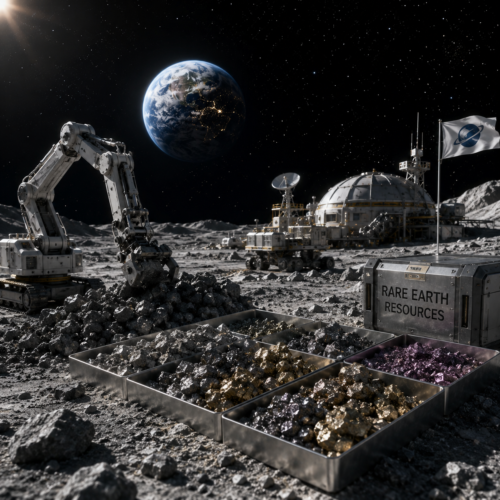
The stability of the rare earth supply chain is crucial for sustaining and advancing space missions. Given the increasing reliance on high-performance materials derived from these resources, any instability within the supply chain can pose significant risks to mission outcomes. One of the primary concerns is the impact on technology development. As space missions often require advanced technologies that incorporate rare earth elements, disruptions in their supply can lead to delays in essential engineering processes, ultimately hindering the innovation cycle necessary for new spacecraft and components.
Operational readiness is also jeopardized by supply chain instability. As space agencies and private entities plan missions, they depend on a steady flow of materials to ensure that all systems are functional and ready for launch. If rare earth materials become scarce or expensive due to geopolitical tensions or mining restrictions, mission timelines may be delayed, and budgets can be strained. A lack of sufficient resources could lead to suboptimal mission designs or even the cancellation of scheduled launches, severely impairing progress in space exploration.
Moreover, the long-term scenario of ongoing rare earth supply chain instability could yield a scenario where the technological gap between nations widens. Countries with greater access to these materials may advance their capabilities at a faster pace than those without, potentially creating a geopolitical imbalance in space capabilities. It is vital for stakeholders to proactively address these risks by diversifying supply sources, investing in recycling technologies, and fostering international collaborations in rare earth resource management.
Practical Risk Management Strategies for Space Technology Development
In the pursuit of sustainable space missions, addressing the risks associated with rare earth supply chain instability is paramount. Implementing effective risk management strategies can significantly enhance the resilience of space technology development by alleviating dependencies on scarce materials. A multifaceted approach involving diversification of supply sources, investment in recycling technologies, and the exploration of alternative materials is critical.
Diversifying supply sources is an essential tactic for mitigating risks associated with rare earth elements. By establishing relationships with multiple suppliers across different geographical locations, organizations can avoid the pitfalls of single-source reliance. In particular, engaging with suppliers in different political and economic contexts can offer better security against geopolitical tensions that may threaten supply chains. This proactive approach ensures that disruptions from one source can be compensated by others, ultimately stabilizing overall resource availability.
Investing in recycling technologies further strengthens sustainability efforts. By developing systems for reclaiming valuable rare earth elements from retired electronic equipment and other obsolete sources, space organizations can decrease their reliance on newly mined materials. Successfully creating a closed-loop system not only reduces waste but also provides a domestic supply of materials. Additionally, promoting policies that facilitate recycling initiatives within the broader industry can encourage widespread adoption of these approaches.
Another viable strategy involves researching and developing alternative materials that can substitute for rare earth elements within specific applications. Advanced materials science research is paving the way for innovative compounds that mimic the beneficial properties of rare earths while minimizing vulnerabilities related to supply chain disruptions. By promoting collaboration between materials scientists, engineers, and manufacturers, the space sector can stay ahead of potential shortages and maintain mission sustainability.
Case Studies: Historical Disruptions and Lessons Learned
The realm of technology has been significantly influenced by disruptions within the rare earth supply chain. One notable instance occurred in 2010 when China imposed export restrictions on rare earth minerals, leading to a steep increase in global prices and availability concerns. Countries heavily reliant on these materials, such as Japan, faced immediate challenges in their manufacturing sectors. As a result, Japan experienced delays in the production of high-tech devices, which underscored the fragility of international supply chains. This historical disruption serves as a critical reminder of the interconnectedness of rare earth resources and technological advancement.
Another illustrative case took place in 2009, when the Australian mining company Lynas Corporation faced significant delays in processing rare earth materials. Regulatory hurdles and environmental concerns led to stalled operations, which not only affected Lynas but also created ripple effects within the global supply chain, especially among companies engaged in electronic manufacturing. This episode revealed that local regulations could disrupt operations, creating vulnerabilities that extend beyond national borders and impacting global technology markets.
These historical disruptions offer vital lessons for current and future space mission sustainability. They highlight the necessity of diversifying source countries for rare earth elements and the importance of developing alternative materials and technologies. Furthermore, they emphasize the importance of establishing comprehensive risk management strategies to mitigate potential impacts on supply chains. By learning from past experiences, stakeholders in the space sector can better prepare for similar challenges, enhancing the resilience of their operations against potential rare earth supply chain instabilities.
Implications for the Space Economy
The stability of the rare earth supply chain holds substantial implications for the broader space economy, impacting not only the sectors directly involved in space exploration but also terrestrial industries interconnected with this domain. Rare earth elements are crucial for producing high-performance magnets, optics, and electronics used in various space technologies, including satellites and propulsion systems. An instability in the supply chain can lead to increased costs and delays in launching missions.
As demand for satellite communications and Earth observation increases, the potential for new markets emerges. Innovative applications in the areas of telecommunications, climate monitoring, and global positioning systems rely heavily on rare earth elements. Companies focused on these markets can expand operations, resulting in job creation within the space sector. Technological advancements driven by stable rare earth supplies enable the development of next-generation spacecraft, which could facilitate human exploration of the Moon and Mars. Thus, the diligent management of rare earth supplies is critical for maintaining competitive advantages.
Moreover, the interplay between terrestrial industries and space exploration can become more pronounced as the space economy continues to grow. Industries such as electronics, telecommunications, and even renewable energy can benefit from the advancements in space technologies. The collaborative efforts between these sectors can lead to enhanced efficiency and innovation, further solidifying the importance of a stable rare earth supply. As companies work to mitigate risks associated with supply chain disruptions, we may witness the establishment of regional partnerships and the development of new mining facilities, ensuring that vital resources are readily available.
In conclusion, the implications of rare earth supply chain stability for the space economy are multifaceted, extending beyond immediate impacts to catalyze growth in various sectors, fostering job creation, and encouraging synergistic innovations essential for the progress of both terrestrial and space ventures.
Conclusion: Path Forward for Sustainable Space Missions
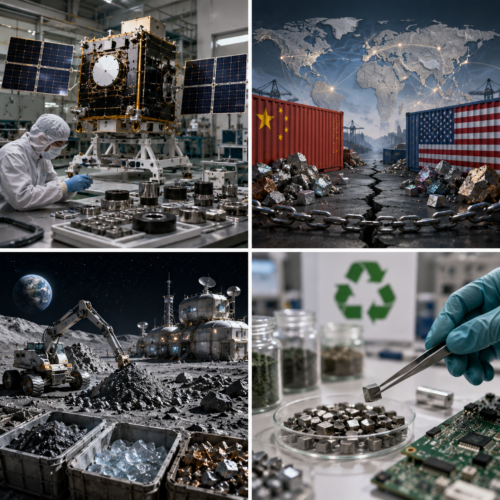
As space exploration continues to advance, the long-term risks associated with rare earth supply chain instability must not be underestimated. The growing reliance on these essential materials for the production of satellites, propulsion systems, and other pivotal technologies means that any disruption in their availability could severely impede mission sustainability. Acknowledging this challenge is crucial for stakeholders in both the governmental and private sectors.
In assessing the impact of rare earth supply chain disruptions, it is evident that implementing proactive measures will be vital for ensuring a resilient framework for future space missions. One of the primary recommendations includes diversifying the sources of rare earth elements to reduce dependence on a limited number of producers. Investments in alternative mining initiatives, recycling technologies, and the development of synthetic substitutes can enhance supply security.
Additionally, fostering international cooperation and establishing strategic partnerships will help build a more robust and sustainable approach to rare earth sourcing. Collaborative efforts among countries to share resources, information, and technological advancements will help mitigate supply chain risks. Moreover, fostering a circular economy perspective, which emphasizes recycling and reusing materials, could significantly reduce the demand for newly mined rare earth elements.
Furthermore, heightened research and development initiatives focused on efficiency improvements in space technologies can lead to a reduced dependency on critical resources. By integrating innovation and sustainability into the design and operation of space systems, the space exploration community can navigate the challenges posed by rare earth supply chain instability.
Ultimately, it is imperative that the space industry embraces a multifaceted strategy aimed at addressing rare earth supply challenges while promoting sustainable practices. Moving forward, a strong focus on collaboration, technological innovation, and resource diversification will pave the way for resilient and sustainable space missions.
The October Prime Day sale is ending soon
🧩 Tour information site – wiztour.com