In the sophisticated world of collecting, the line between passion and portfolio has never been finer. As we navigate the investment landscape of 2026, the romantic image of a dusty cellar is being augmented by the precision of high-frequency data analysis. For the modern collector—whether you are a seasoned connoisseur restoring vintage bottles or a Gen Z digital native exploring fractional ownership—understanding the intersection of fine wine and artificial intelligence is no longer optional; it is essential.
Wine investment has historically been an opaque market, dominated by insider knowledge and subjective critic scores. However, the democratization of data has revolutionized this asset class. Today, we don’t just taste the terroir; we analyze transaction history, weather patterns, and global scarcity using advanced algorithms. This guide aims to demystify the technical complexities of the 2026 wine market, offering a practical roadmap for building a collection that is both personally rewarding and financially robust. Let us embark on a journey where tradition meets technology, ensuring your collection appreciates in value while you appreciate its history.
Table of Contents
The Digital Transformation of the Wine Market
From Cellar to Cloud: The New Standard of Provenance
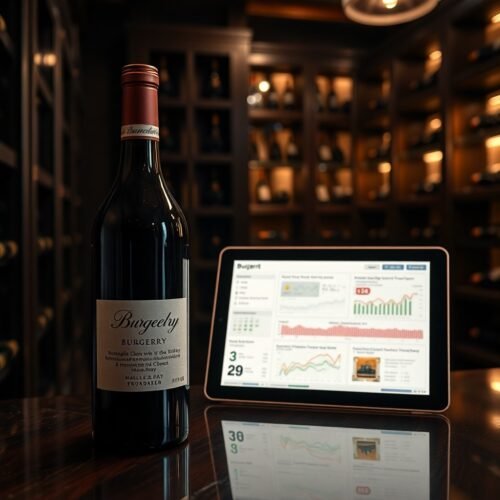
The concept of provenance has evolved dramatically over the last decade. In the past, a paper trail was the gold standard for proving a wine’s authenticity and storage history. By 2026, this has shifted entirely to blockchain-backed digital ledgers. For the collector, this means that every bottle of premium wine now comes with a “digital twin”—a secure, immutable record of its journey from the vineyard to your climate-controlled storage.
This “Cellar to Cloud” transition is crucial for investment security. 위조 위험을 ‘꽤 감소(reduces)’시킵니다., which previously plagued the top-tier market. When you purchase a blue-chip Burgundy or a cult Napa Cabernet today, you are acquiring a verified asset with transparent liquidity. This shift has opened the doors for global trading, allowing collectors in Seoul, London, and New York to trade assets instantly without the immediate physical movement of delicate bottles, thereby preserving their quality and value.
How AI Algorithms Predict Vintage Quality
Artificial Intelligence has moved beyond simple data aggregation to predictive analytics. In 2026, AI models analyze millions of data points—including historical weather data, soil composition analysis, and even satellite imagery of vine health—to predict the investment potential of a vintage before it is even bottled. This allows astute investors to identify undervalued gems early in the lifecycle (en primeur) with a higher degree of confidence than ever before.
These algorithms do not replace the human palate; rather, they complement it. By cross-referencing critic scores with market sentiment and macroeconomic indicators, AI tools provide a “Fair Value” assessment. This helps collectors avoid overpaying for hype and focus on intrinsic value. For instance, if an algorithm detects a similarity in weather patterns between a current vintage and a legendary historical year, it signals a strong “buy” recommendation, allowing collectors to secure allocations before prices skyrocket due to later critical acclaim.
Analyzing Market Trends: What the Data Says
Regional Performance: Old World vs. New Frontiers
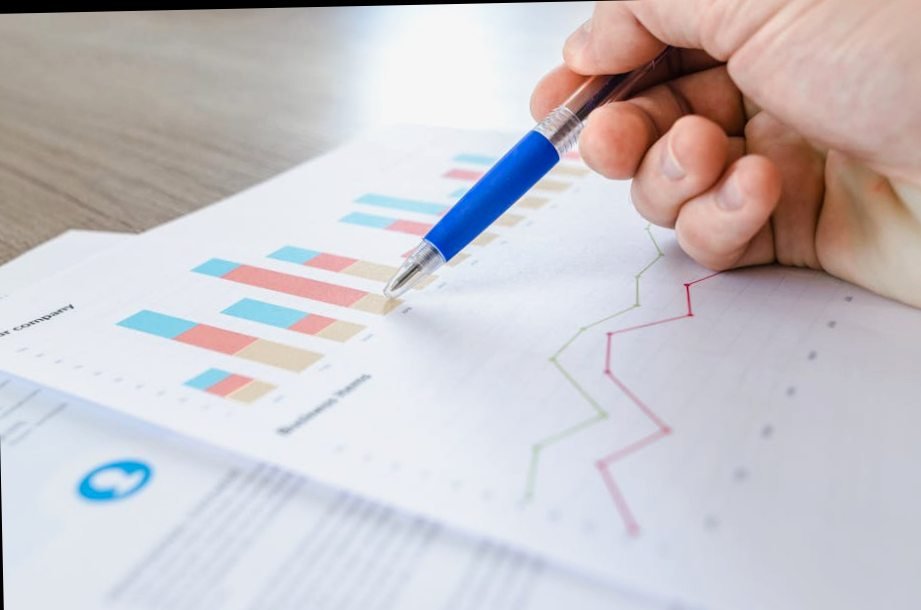
The geography of wine investment is expanding. While Bordeaux and Burgundy remain the heavyweights, investment data from 2026 reveals a significant shift toward “New World” icons and emerging regions that are benefiting from climate resilience. Collectors looking for growth must look beyond the traditional châteaux.
Comparison of Regional Investment Performance (2025-2026 Data)
[Data Summary]
- Region : Burgundy / Primary Asset Class : Grand Cru Red/White / Avg. Annual ROI : 8.5% / Risk Profile : Moderate / AI Outlook : Stable Growth
- Region : Bordeaux / Primary Asset Class : First Growths / Avg. Annual ROI : 5.2% / Risk Profile : Low / AI Outlook : Defensive Asset
- Region : California / Primary Asset Class : Cult Cabernets / Avg. Annual ROI : 11.4% / Risk Profile : High / AI Outlook : Volatile but High Reward
- Region : Tuscany / Primary Asset Class : Super Tuscans / Avg. Annual ROI : 9.8% / Risk Profile : Moderate / AI Outlook : Rising Star
- Region : Champagne / Primary Asset Class : Vintage Prestige / Avg. Annual ROI : 7.1% / Risk Profile : Low / AI Outlook : Consistent Performer
The data suggests that while Bordeaux offers stability akin to a government bond, regions like Tuscany and California are behaving more like growth stocks. Furthermore, AI analysis points toward English Sparkling Wine and high-altitude South American wines as the next frontier for long-term holding, driven by changing global temperatures affecting traditional grape-growing zones.
The Rise of “Phygital” Wine Assets
We are witnessing the maturity of the “Phygital” (Physical + Digital) asset class. This trend is particularly relevant for the alternative assets sector. A phygital wine asset involves purchasing a physical bottle that is stored professionally, while the ownership is represented by a tradeable NFT (Non-Fungible Token). This model appeals strongly to the digital-native collector who values liquidity and ease of transfer over physical possession.
The advantage here is twofold: preservation and accessibility. The wine remains in optimal conditions, ensuring its value does not degrade due to improper handling. Meanwhile, the digital token can be sold or used as collateral in decentralized finance (DeFi) protocols. For the collector, this means your wine collection is not just a static display but a dynamic financial instrument. It bridges the gap between the tactile joy of collecting and the efficiency of modern finance, making fine wine accessible to a broader demographic.
Building a Data-Driven Collection Strategy
Step-by-Step AI Portfolio Construction
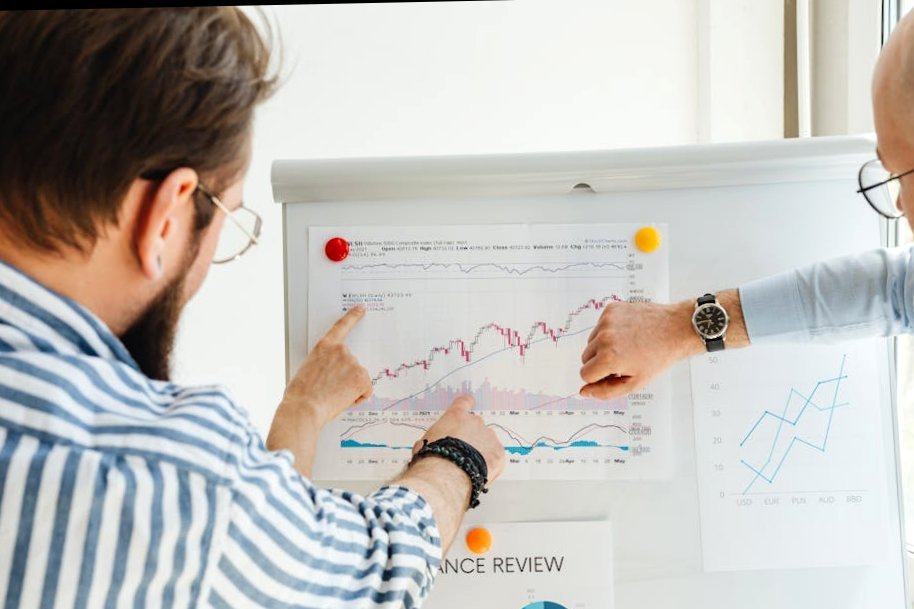
Building a collection in 2026 requires a structured approach. It is no longer enough to buy what you like to drink; you must buy what the market values, balanced with your personal aesthetic. Here is a proven methodology for starting a data-driven collection:
- Define Your Horizon: Determine if you are collecting for short-term resale (3-5 years) or long-term heritage (10+ years). AI models adjust recommendations based on this timeline.
- Set a Budget and Allocation: Decide how much capital to deploy. A healthy starter portfolio might be $10,000, allocated 60% to “Blue Chips” (e.g., Bordeaux) and 40% to “Growth” (e.g., Burgundy, Italy).
- Utilize Analytical Tools: Subscribe to a wine data platform. Input your budget and preferences. The AI will scan global merchant lists to find wines trading below their market average.
- Execute and Store: Purchase through bonded warehouses. Ensure the data of your purchase is logged in your portfolio management app.
- Monitor and Rebalance: Review your portfolio quarterly. If a specific region spikes in value (as Champagne did in the early 2020s), the data might suggest selling a portion to reinvest in undervalued regions.
This systematic approach removes the guesswork. It transforms the collector from a passive observer into an active manager of their assets, ensuring that every bottle serves a purpose within the broader portfolio.
Risk Management through Diversification
Just as with stocks, putting all your capital into a single vintage or producer is risky. Market trends can be fickle; a producer that is fashionable today may fall out of favor tomorrow. Therefore, diversification is the cornerstone of a resilient collection.
A robust strategy involves diversifying across three axes: Region, Vintage, and Type. Do not just buy 2020 Bordeaux. Mix in 2018 Napa Cabernets, 2015 Super Tuscans, and perhaps some vintage Port. AI analysis helps visualize your portfolio’s concentration risk. If the software detects that 70% of your value is tied to the French market, it will flag this as a risk, prompting you to consider diversification into New World wines or Champagne. This balance protects your investment against localized weather disasters, tariff changes, or shifts in critic preferences.
The Gen Z Influence on Premium Wine
Sustainable and Organic Valuation
A fascinating trend driven by Gen Z collectors is the “Green Premium.” In 2026, investment data clearly shows that wines produced with Biodynamic, Organic, or Regenerative farming practices are trading at a premium compared to their conventional counterparts. This is not just an ethical stance; it is a financial reality.
Collectors are increasingly viewing sustainability as a proxy for quality and longevity. Vines that are farmed without harsh chemicals often produce fruit with higher integrity and terroir expression. Consequently, the secondary market demand for producers like Pontet-Canet or Domaine Leroy (pioneers in biodynamics) has outpaced the general market index. For the aspiring collector, focusing on sustainable producers is a strategic move. It aligns your collection with the future values of the market, ensuring that your assets remain desirable to the next generation of buyers.
Fractional Ownership Models
The barrier to entry for premium wine has traditionally been high cost. A single bottle of Domaine de la Romanée-Conti can cost as much as a car. However, fractional ownership has democratized access, allowing younger investors to participate in the appreciation of trophy assets without owning the whole bottle.
Whole Bottle Ownership vs. Fractional Investment
[Data Summary]
- Feature : Entry Cost / Whole Bottle Ownership : High ($500 – $50,000+) / Fractional Investment : Low ($50 – $100+)
- Feature : Storage / Whole Bottle Ownership : Owner’s Responsibility / Fractional Investment : Managed by Platform
- Feature : Liquidity / Whole Bottle Ownership : Low (Weeks to sell) / Fractional Investment : High (Instant trading)
- Feature : Consumption / Whole Bottle Ownership : Can drink the asset / Fractional Investment : Investment only (usually)
- Feature : Diversification / Whole Bottle Ownership : Harder with low budget / Fractional Investment : Easy to spread risk
This model allows a collector to own 1% of a 1982 Petrus and 5% of a Screaming Eagle, creating a highly diversified portfolio with minimal capital. While purists may argue this removes the romance of holding the bottle, the data proves it is an effective way to track wine market performance. It serves as an excellent entry point, teaching the mechanics of valuation before stepping into physical collecting.
Practical Guide: Spotting Undervalued Gems
Using AI Tools for Valuation
How does one actually find a bargain in an efficient market? The answer lies in data discrepancies. AI tools excel at spotting “Market Arbitrage.” This occurs when a specific vintage of a top wine is priced significantly lower than statistically similar vintages from the same producer.
For example, if Chateau Margaux 2015 is trading at $1,500 and the 2016 vintage—which has identical critic scores and weather ratings—is trading at $1,100, the AI flags the 2016 as undervalued. As a collector, you use this AI analysis to make a targeted acquisition. You are not guessing; you are exploiting a temporary market inefficiency. To start, use free or subscription-based apps that aggregate global prices (like Wine-Searcher Pro or Liv-ex data feeds). Set alerts for your target wines at 10-15% below market price. Patience, combined with data, is the hunter’s best weapon.
Case Study: The 2020 Vintage Resurgence
Let’s look at a practical story from the recent market. The 2020 vintage in many European regions was initially overlooked due to the global pandemic disrupting en primeur tastings. Critics could not travel, and scores were delayed. Prices remained stagnant for two years.
However, astute collectors who analyzed the weather data—noting the hot, dry summer conducive to concentrated, age-worthy wines—began quietly accumulating these stocks. By 2025, when the wines were bottled and re-tasted by critics, scores were upgraded massively. Those who relied on investment data rather than the initial lack of hype saw their portfolios jump by 30-40% in a single year. The lesson here is clear: Data often reveals the truth before the market consensus catches up. Trusting the fundamentals of the growing season can lead to significant rewards.
Conclusion
The landscape of fine wine collecting in 2026 is a thrilling blend of heritage and high-tech. By leveraging AI analysis and respecting market data, you can build a collection that is not only a source of personal pride but also a robust financial asset. Whether you are buying physical bottles for a future celebration or trading fractional shares of a rare vintage, the key is to remain informed and objective.
Remember, the goal of this platform is to guide you through every step of your collecting journey, making the complex simple. Start small, trust the data, but never lose the passion that drew you to wine in the first place.
Are you ready to let data guide your next pour, or will you stick to your intuition? Share your thoughts on the future of collecting below.
🧩 AI In Wine And Whiskey Investing: Smart Tool Or Sour Strategy?
➡️ Advanced Strategies for Sheet Music Collection Organization Explained